
Auditioning for NYC Performing Arts Middle and High Schools: A Parent’s Guide
School choices, audition preparation, and free resources for NYC families
For students applying in fall 2026 to enter school in fall 2027. Updated October 12, 2026.
If your child loves acting, singing, or dancing, a performing arts school may be an exciting next step. But between choosing schools, finding audition material, recording videos, and keeping track of deadlines, the application process can feel like a production of its own.
Start with a manageable plan: understand the requirements, choose material that suits your child, and give them time to prepare. Here’s where to begin.
Start with the right school—and the right program
An arts-focused school should fit your child’s interests and everyday life. Consider the academic curriculum, commute, school culture, and how much time your child wants to spend training.
NYC’s high school theater options include LaGuardia, Professional Performing Arts School (PPAS), Repertory Company High School for Theatre Arts, Talent Unlimited, Frank Sinatra School of the Arts, and others. Drama, musical theater, vocal music, and dance are distinct pathways; a student may need different material for each.
For middle school, PPAS offers Theatrical Arts, while Mark Twain I.S. 239 and District 21 schools offer talent-area options with different assessment formats.
Explore program listings in MySchools, checking eligibility, admissions priorities, and selection criteria. Attend open houses and let your child help build the shortlist.
Download our school comparison guides
Researching your options? Our free printable guides bring together program offerings, audition requirements, eligibility information, and official school links for the fall 2026 application season, for September 2027 entry.
Download the NYC Performing Arts High Schools Guide — Compare nine arts-focused public high schools.
Download the NYC Performing Arts Middle Schools Guide — Explore eight public-school options and their admissions formats.
These are curated starting points, rather than complete citywide directories. Use the official links in each PDF to confirm current program requirements.
Key dates for fall 2027 entry
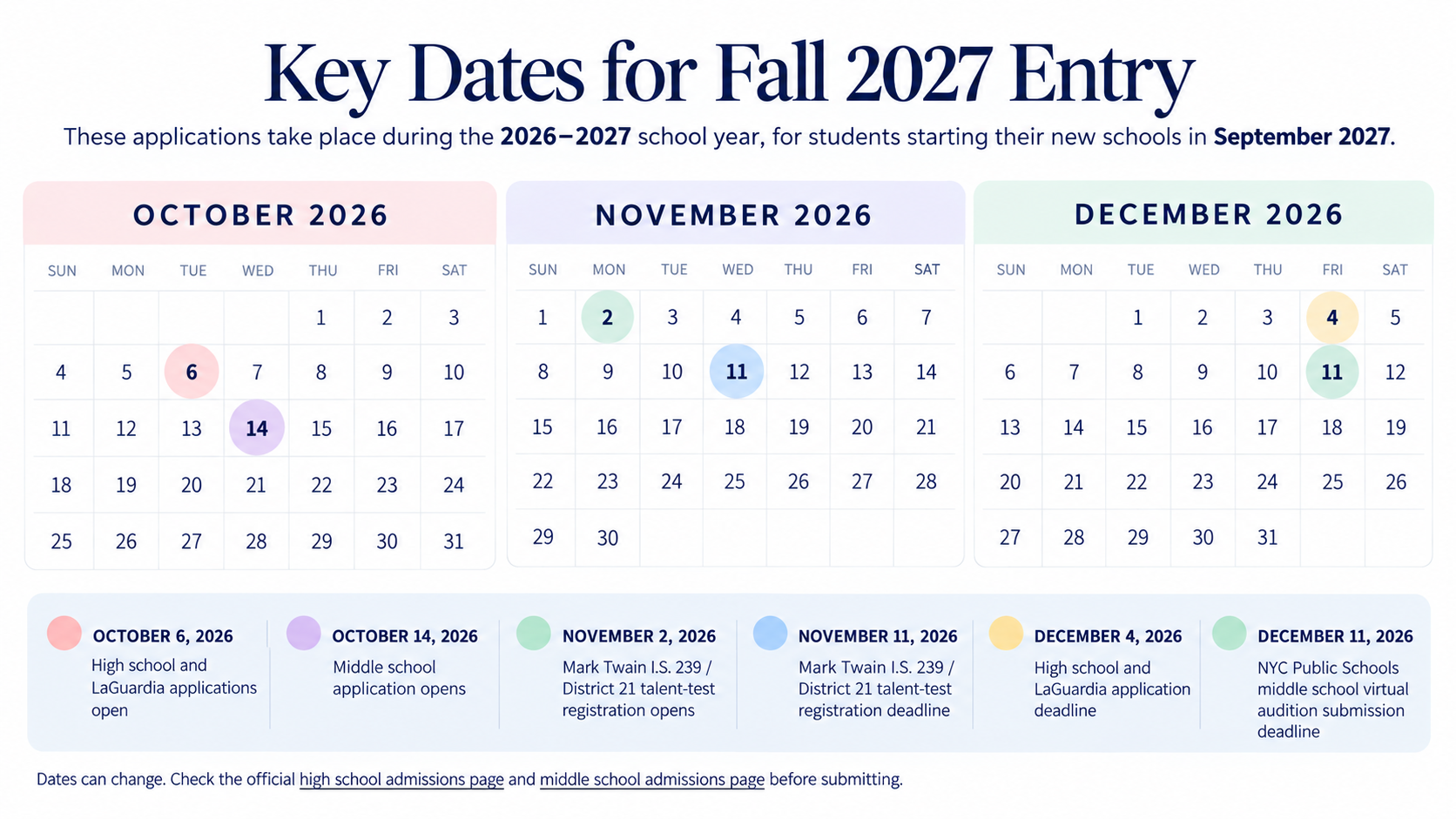
These applications take place during the 2026–2027 school year, for students starting their new schools in September 2027.
High school and LaGuardia applications: Opens October 6, 2026; deadline December 4, 2026.
Middle school application: Opens October 14, 2026; deadline December 11, 2026.
Mark Twain I.S. 239 / District 21 talent-test registration: Opens Check the current registration instructions; deadline November 2, 2026.
NYC Public Schools also lists December 11 as the deadline for middle school virtual audition submissions. Keep track of registration, application, audition, and any callback instructions separately.
LaGuardia has a separate application alongside the general high school application. Families interested in LaGuardia should complete that process as well.
Dates can change. Check the official high school admissions page and middle school admissions page before submitting.
What will your child need to prepare?
For high school theater, current NYC Public Schools guidance calls for two contrasting, memorized one-minute monologues. Certain programs also require a song; the theater guidance specifies 16 bars, or approximately one minute. Vocal music and dance have their own requirements, so do not assume a theater audition covers those applications.
All audition high schools accept virtual submissions, and some offer an in-person option. Check the official high school audition guidance for components and formats.
Middle school requirements vary. PPAS requires acting and singing. Mark Twain / District 21 drama and dance assessments are in person, while some other talent areas use virtual auditions. Consult the official middle school audition guidance.
If two official pages disagree, ask before recording. At the time of writing, PPAS’s school page and NYC Public Schools’ central middle school page list different performance lengths. Confirm the current instructions with admissions rather than relying on an older checklist.
Choose material your child can make their own
A recognizable song or an emotionally intense monologue is not automatically the strongest choice. Look for material your child understands and can perform with clear intention.
For a monologue, ask:
Who is the character speaking to?
What do they want from that person?
What just happened?
What changes during the speech?
Choose contrasting pieces that reveal different sides of the performer. A quietly funny character and a determined, serious character can offer useful contrast without asking a young actor to manufacture enormous emotions.
Read the play together where practical. Understanding the scene helps your child make choices that belong to the story. Follow the program’s rules about permitted sources and cuts. NYC Public Schools’ general theater preparation resource offers additional guidance on choosing age-appropriate published material.
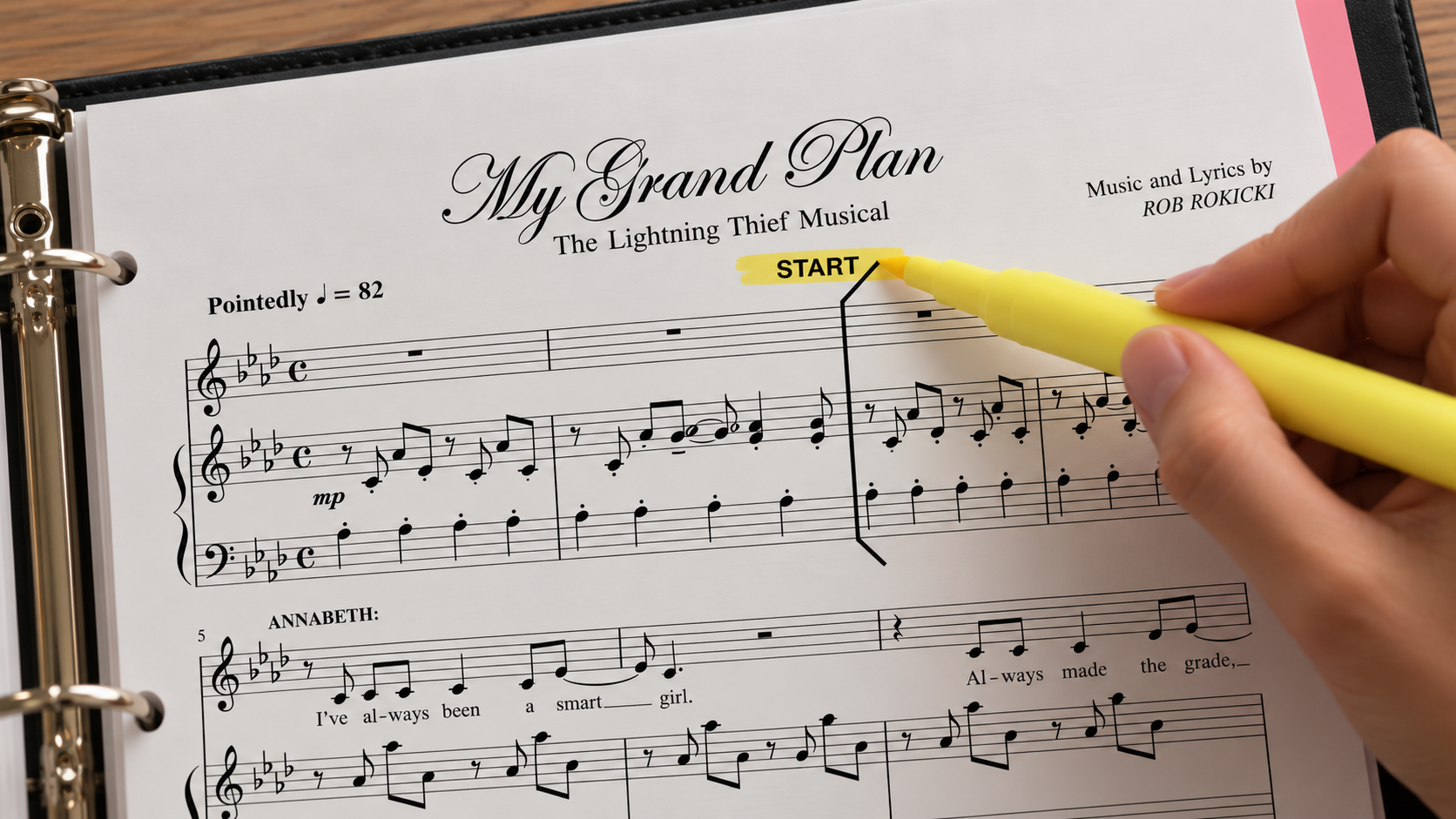
For a song, prioritize a comfortable range, clear storytelling, and a character your child connects with. A song they can sing confidently and meaningfully is a better preparation choice than one that leaves them struggling through the highest notes. Practice the exact cut with the accompaniment they will use, if accompaniment is permitted.
Why audition coaching is worth considering
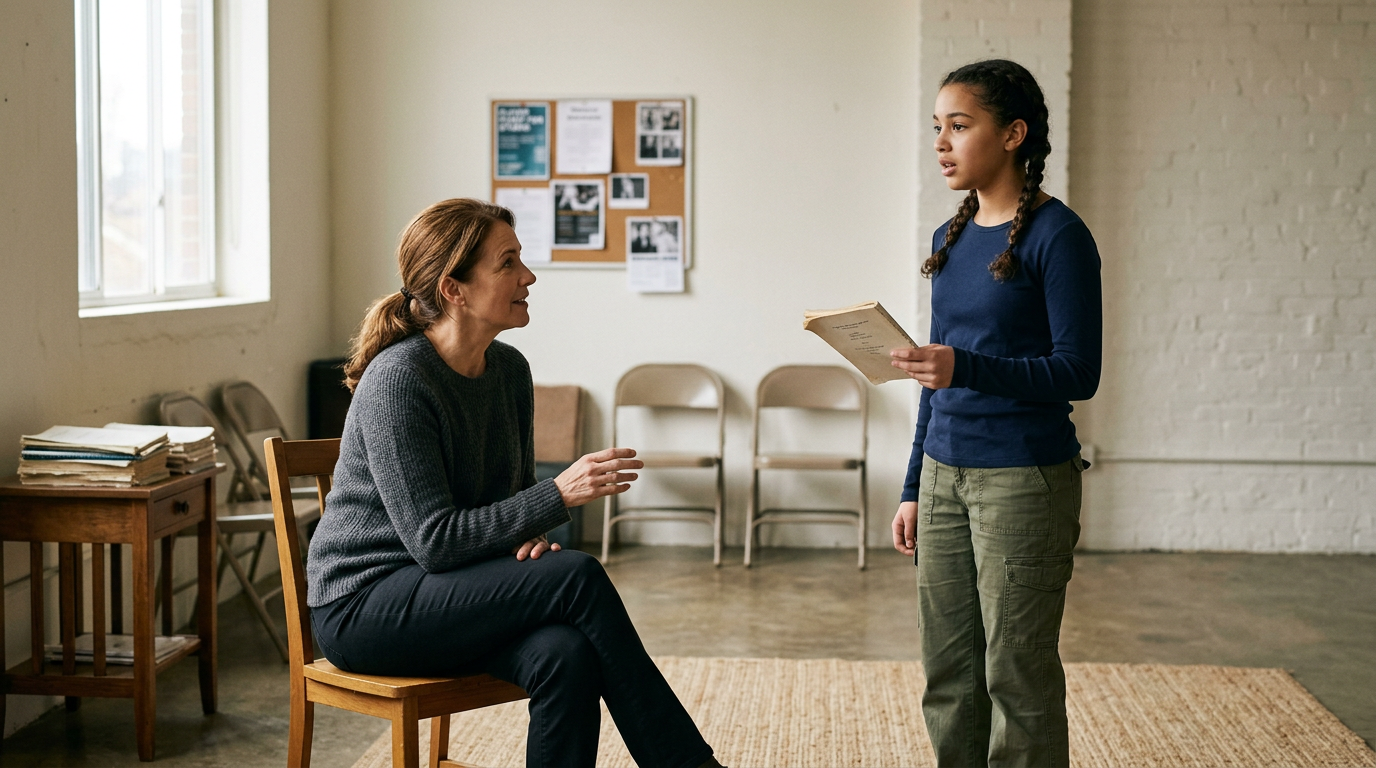
For an audition as important as entry to a performing arts middle or high school, working with an experienced coach can be a valuable investment in your child’s preparation. Even a student who is confident onstage may benefit from help choosing material and adapting it to a short audition or a self-tape.
A good coach can help your child:
Choose material that suits them: songs in a comfortable range and age-appropriate monologues that reveal their personality and strengths.
Move beyond memorization: understand the character, clarify the story, and make specific acting choices.
Prepare for the actual requirements: rehearse the correct cuts, introductions, and components for the programs they are applying to.
Practice the audition experience: work through nerves, receive feedback, and become more comfortable responding to direction.
Refine their self-tape performance: review what comes across on camera and make useful adjustments before the final recording.
For younger students, coaching can turn an unfamiliar process into manageable steps. For high school applicants, it can help bring greater depth and independence to their work. The goal is to help your child present their own voice and personality with confidence.
Start early enough to leave time between sessions for practice. Coaching is not an admissions requirement or a guarantee of acceptance; a school arts teacher can also be a helpful starting point. Choose someone who understands young performers and the current audition process, and makes your child feel supported while challenging them to grow.
At Broadway Rise, our Broadway Rising program handles every step of audition preparation: repertoire selection, personalized audition coaching, and professional filming of the entire audition. We film weeks before the submission deadline, allowing plenty of time to review the recordings and make any revisions or re-recordings needed.
We follow the requirements of each program your child is exploring to the letter—including filming the required “slate,” or introduction, at the beginning of each audition video. From choosing the right material to preparing the complete recordings, we take care of the details so your child can focus on their performance. Get in touch to discuss their school choices and audition timeline.
Build confidence through regular practice
Memorizing the words is the beginning. Once the material is secure, work on listening, intention, diction, and how the character’s thoughts develop.
Short, focused rehearsals can make preparation more manageable. Give each session a purpose: clarify the story, practice the introduction, run the song cut, or try the monologue in front of someone new.
A mock audition can help your child experience the whole sequence: introduce themselves, perform, finish, and reset. Practice recovering from a mistake as well. If a live audition includes new directions, listening and trying the adjustment is a useful skill.
Keep feedback specific. “Let’s make the last sentence easier to hear” gives a child something to work on. “Be more confident” rarely does.

Example of proper self-tape framing for a musical theater audition. A chest-up shot keeps facial expressions clearly visible while allowing room for natural movement and performance.
Make the self-tape clear and simple
Follow the program’s recording instructions first. Then make sure the viewer can see and hear your child easily.
Use a quiet room, a simple background, steady framing, and light that falls on the performer’s face. Record a short test before doing full takes. Check that accompaniment does not overpower the voice and that the framing suits the task.
Practice the required introduction, often called a slate. Include the information requested by the program, and keep files containing your child’s student ID private.
For help setting up at home, explore our Ultimate Self-Tape Setup Guide, with practical guidance on lighting, sound, backdrops, and equipment. Start with what you already have—a smartphone and a well-chosen recording space can be enough. Any equipment you use should support a clear performance and meet the school’s recording instructions.
Download our Audition Slates & Self-Tape Guide for printable slate templates, filming checklists, and guidance on preparing the required introductions for different audition disciplines. Use it alongside the equipment guide as you plan and record your child’s audition.
Leave time to review and upload. Watch the selected files all the way through, check that they are assigned to the correct audition components, and verify both the application and additional materials are submitted. Keep copies and submission confirmations.
Help your child keep the process in perspective
Ask what they enjoy about performing and what they hope to learn. Make space for excitement and nerves without turning every rehearsal into a judgment.
An admissions decision is not a complete assessment of a child’s talent or future. Preparation can still leave them with stronger material, better practice habits, and more confidence sharing their work.

Preparing with Broadway Rise
At Broadway Rise, we help young performers develop their acting, singing, and audition skills in a supportive training environment.
Our Broadway Rising program combines acting, voice, and dance training with complete school audition preparation, from repertoire selection and coaching to professional filming that follows each program’s requirements. We film weeks before the deadline to leave plenty of time for review and revisions. Families preparing for middle or high school auditions can contact us to discuss their child’s goals and submission timeline.
Email classes@broadwayrise.com or call 646-360-0367 to talk about preparation. If your child has an approaching deadline, let us know when you get in touch so we can discuss suitable options.
All FREE downloadable resources:
NYC Performing Arts High Schools Guide
NYC Performing Arts Middle Schools Guide
Audition Slates & Self-Tape Guide
Prepared for the fall 2026 application season, for September 2027 entry.
This guide focuses on NYC public school performing arts admissions, particularly theater and musical theater. Private and charter schools may have separate processes. Requirements and dates should always be checked against current NYC Public Schools, MySchools, and school admissions instructions.
